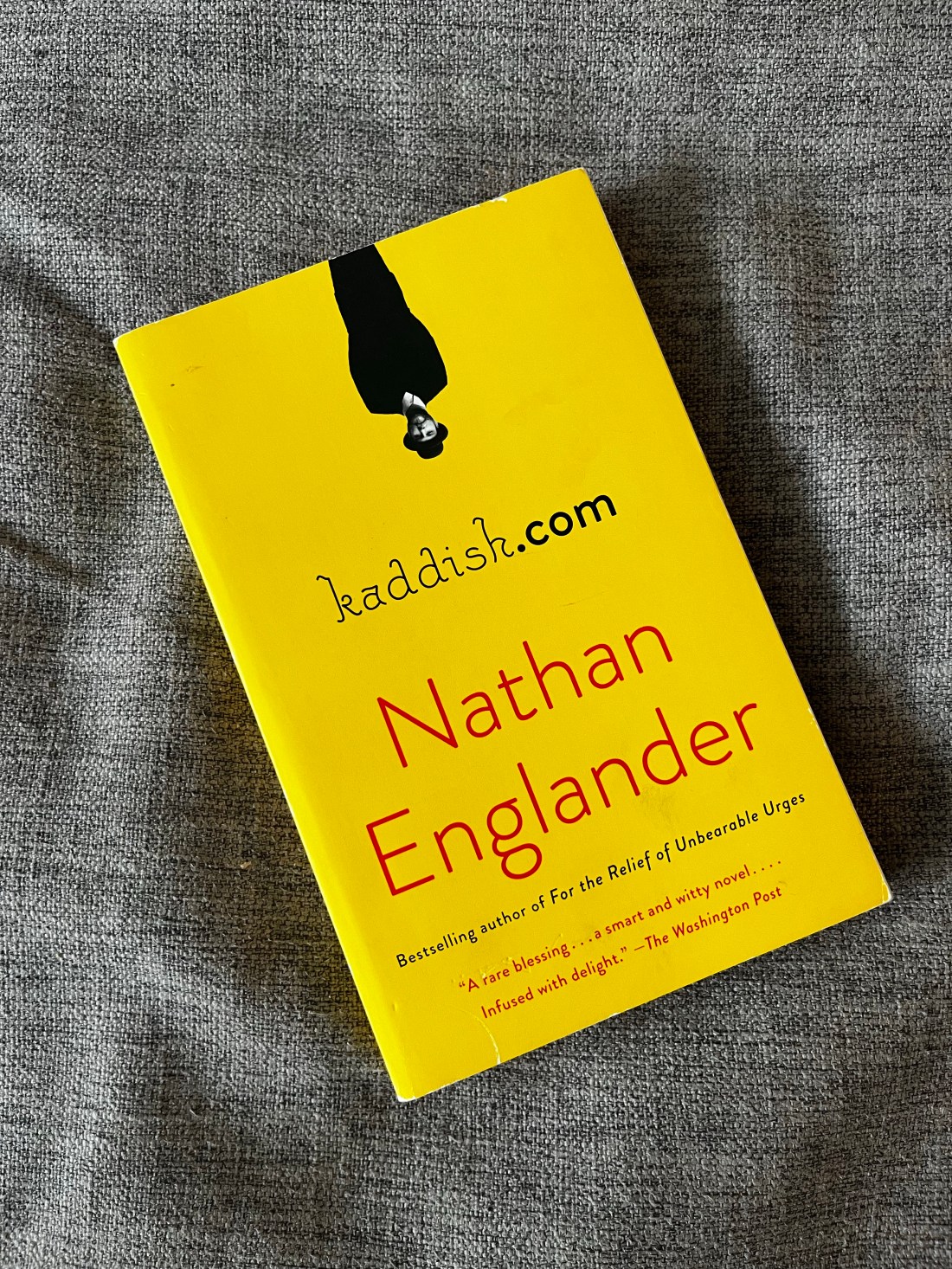
Larry has gone off the derech – he no longer observes as an ultra-Orthodox Jew – but has been called upon to honor his recently deceased father. According to tradition, a child must say kaddish daily for a parent who has passed away, but Larry is ready to eschew this responsibility. He wants the easy way out so he turns to the internet – the easy way out for just about anything. There’s an app for that, amirite? There, he discovers kaddish.com, a site that allows him to pay for a student in Israel to say kaddish for him. Seems like a win-win, no? Years later, Larry has returned to Brooklyn, in the insular community where he was raised, going by Shuli and working as a Hebrew teacher. He’s now plagued with guilt that he didn’t dutifully pay respects to his father himself and commits himself to finding the young student he paid so he can right his perceived wrong.
Even when we say – even when we think – we’re above or beyond something, a sense of responsibility is often so ingrained. Tradition can have an incredibly tight hold on a person, pulling them back to something they think they don’t need. But perhaps we do need those traditions to find our true center. I understand that sometimes you need to leave to discover you had been where you belonged all along, but I wish Englander provided just a bit of narrative around what brought Larry – Shuli – back to Orthodoxy. Perhaps all of it, both the leaving and the returning, is tied to his relationship with his father. Wanting Needing to prove himself to his father, feel supported, and become a nurturing father himself might be behind every decision and step of his search. That’s saying quite a lot about father/son dynamics.
3.5 out of 5 stars.
Pair with: A single glass of full-bodied red wine, drank in the dark


